
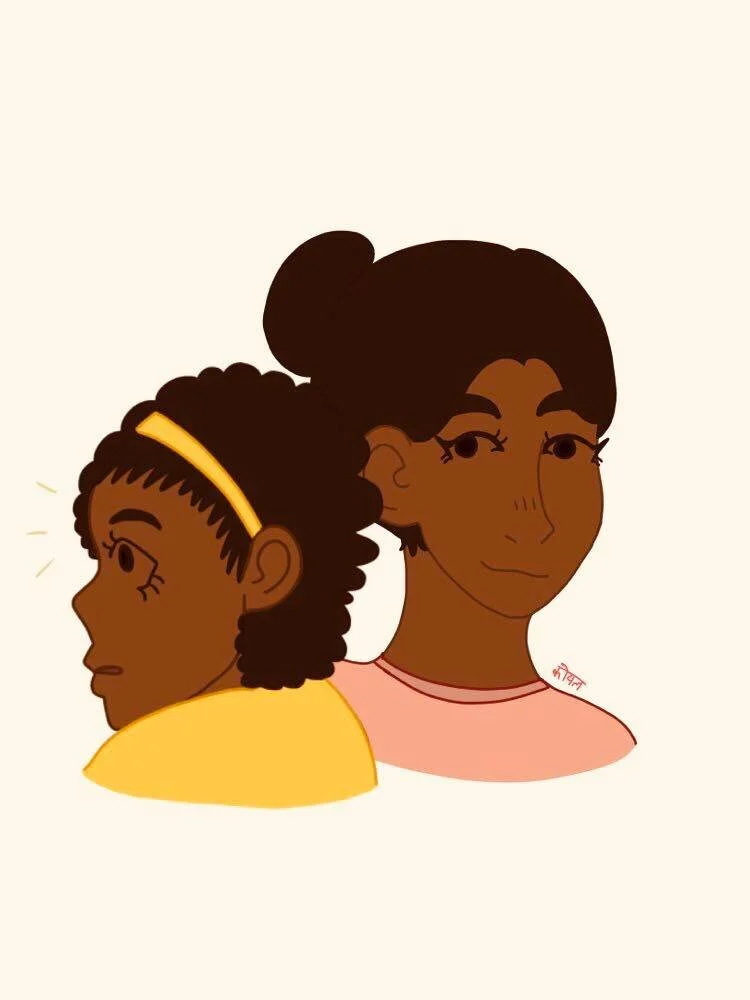

By Maatharan Maheswaran
Every morning I would arrive at the train station at 7am, tea in hand, ready to hop on a 7:14am train, school-bound. I liked early mornings; I liked the quiet trains bereft of loud fellow students and the odd drunk. I looked forward to the quiet library, yet to be polluted by the academic elite. But most of all, I enjoyed the ten-minute walk from the station to school. A small temporal pocket of stillness in a chaotic day as a selective-entry high school student.
However, this morning was different. This morning was not still nor calm. My walk was interrupted by the familiar ping of a Facebook notification. I had just been tagged in a video. A video of a man hitting a punching bag in an effeminate manner. I was tagged by one of ‘the boys’. In the vernacular of these cis het boys, the man was punching “like a sissy”. The man was punching like me.
Cortisol levels increase, heart palpitations commence, and my attention enters a very familiar labyrinth. I start to focus on the effeminate inflexions of my speech, the noticeable sibilance of my s’, my gait. Is my walk masculine enough? Are my hand gestures too feminine? I enter a familiar thought prism centred around my femininity, and how according to those boys, it made me less of a man.
This was one of many experiences of femme-shaming and inherent homophobia that I experienced as a student at an ‘elite’ selective-entry high school.
As a closeted queer teen boy, I would not share these experiences with my peers for fear of being outed. I would compartmentalise these experiences and place them into repressed thought prisms hoping that I would forget them. This was very much a shared experience among many queer and non-binary students. It is these experiences which restricted our ability to achieve authenticity.
-------------
It is no secret that mainstream society provides a contrived and rigid framework for being masculine and feminine. It renders one’s ability to achieve authenticity as an onerous one. Nietzsche notes that the authentic self is achieved by avoiding the ‘herding animal morality’. But how can one avoid the ‘herding animal morality’ when the herd, itself, occupies a powerful space in many social landscapes. As a queer cis-gendered man of colour, who embodies an intersectional gender presentation, one where femininity and masculinity intertwine, I struggled to manifest this authentic self. I struggled to transcend the herd. This plight was amplified by the toxic masculinity deposited by the so-called ‘elite’ infrastructure at an academically competitive selective-entry school I attended. I cast your attention to a recent incident that garnered necessary media and public awareness.
Activist and Miss Universe Australia, Maria Thattil was added to a group chat comprised 19-year-old men. These men were graduates of ‘elite’ selective-entry schools, who messaged grossly misogynistic and vulgar comments in the chat group. Maria shared this to her Instagram account, which sparked necessary public discourse. This included female and non-binary alumni speaking out about their own experiences of sexism and harassment at the hands of these schoolboys. This discourse has mainly been centred around how pervasive toxic masculinity has endangered the female experience. Part and parcel of this discussion of toxic masculinity encapsulate the deep-rooted homophobia and femme shaming permeated by these boys under the guise of academic intelligence.
You may be wondering, how can so-called ‘elite’ and ‘intelligent’ students show such inherently homophobic behaviour? Perhaps they are just naïve boys, yet to understand the diversity of the outside world? I think not. It is evident from Maria Thattil’s experience that this inherent toxic masculinity exists past high school years, to when these boys are now adults.
So, why are selective entry schools not aligned with their socially conscious outside? Why are these students existing in a regressive social landscape? To understand the responses to these questions we must first unpack the catchphrase ‘elite selective-entry school’, particularly the term ‘elite’.
What does it really mean to be ‘elite’?
Part and parcel of defining elitism is the consideration of ‘intelligence’. Within the cultural context of these schools, the requisite test for intelligence and elitism is academic capability. Whilst the importance of other values may be emphasised, these institutions are constructed for the purpose of fostering the academic elite . As a result, some students will discharge sexism, homophobia, transphobia and femmephobia, by validating their behaviour by the sole fact that they are academically apt. Emotional quotient and social intelligence are not considered. As a result, toxic masculinity disseminates and impinges on the experiences of those who identify as women, trans, non-binary and queer.
It is under the facade of intelligence that a sub-set of selective entry students (namely cis-gendered men) disseminate sexism, homophobia and femme shaming not only in the schoolyard but also in group chats and social media posts.
Intelligence should be recognised as a composite trait that encompasses academic intellect and social intelligence, emotional quotient, and inclusive thought. It is clear that at times selective entry schools fail to consider this composite definition of intelligence when educating boys.
This cultural definition of ‘intelligence’ adopted by selective-entry schools is endangering the lives and experiences of queer, trans and non-binary youth. It is also essential to recognise that many of these students are of colour, children of refuges and migrants, children of war, and are from cultures where the ability to be authentic is rendered difficult by collectivist principles. For many, the home is not a safe domain for self-expression. Therefore, it is vital that these schools provide a sanctuary for free introspection, safe self-discovery, and a place to mould their authentic self. The first step of redress is changing the status-quo and re-defining this regressive notion of intelligence.