By Yohanna Mequwanint
Hair, race, and politics is an interconnected concept that is rarely given the platform it deserves. It’s often dismissed or relegated to the background, despite the fact that for Black folk, hair is an intrinsic part of our existence and identity. Hair politics is a mixed amalgamation of colonial roots, oppression, and othering, and in order to understand and frame the weight of its complexity, one has to understand its historical context.
Before the effect of colonial influence, hair played an intrinsic role throughout early African civilisations and as such, through a pillar of African-ness. Depending on the area, the cultures, and customs of the tribe, hair can be a method of communication. One that indicates family background and social status. And for others, it’s an indication of which tribe they belong to, or even more significantly, for some tribes, hair is as intrinsic as a form of spiritual connection to their ancestors and their God(s).
The underpinning of hair politics stems from its use as a colonial tool of punishment, and the rhetoric of dehumanisation that comes from it, however, this notion of hair acceptability has carried on throughout history.
The early 20th century brought with it the first chemical relaxers for black hair care, a process that enabled the natural hair of black women to be chemically straightened. As such, this opened the avenue for black people to assimilate further into western society.
At the 87th Annual Academy Awards, Disney star Zendaya hit the Oscars with her hair styled in locs. Giuliana Rancic, covering the news on E!’s Fashion Police reported that Zendaya probably, “smells like patchouli oil… or weed.” Zendaya responded stating that not only was the comment “outrageously offensive,” but that the reason she wore her hair in locs on such a public platform to was to “remind people of colour that our hair is good enough.”
As an Ethiopian Australian, my experience with blackness in this country has been rife with xenophobia and discrimination. Although I live in Melbourne, which for all intents and purposes is meant to be the centre of multiculturalism, I’ve been riddled with microaggressions about my own hair from as early as I could remember.
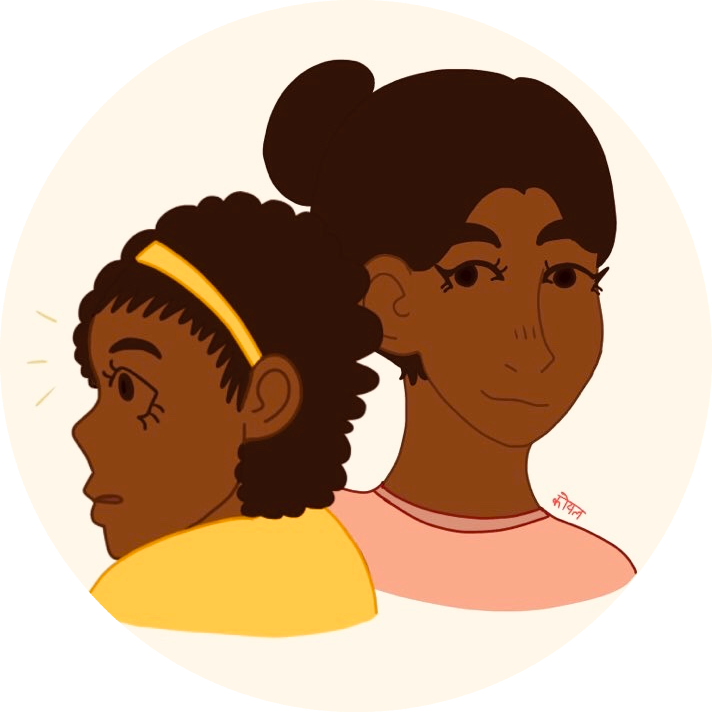
For a long time, I suppressed a lot of the traumatic memories that came with being a black face in a white place. In primary school, I was one day inspired to wear my natural hair out. So with kinks and curls flying about my little brown head, I went off to school, only to be chased at lunchtime by laughing kids as they pointed at my hair and I (naively thinking that I did look quite nice ) burst into tears.
I did not wear my natural hair out in the same way for almost ten years.
High School however had in store for me its own set of traumas. It was normal in fact, for me to go to school and be unwillingly touched by a plethora of eager white hands, I dreaded the invasively awkward question, “can I touch it?” One that was often always asked as an afterthought, after the person had already made contact with my hair.
I have a vivid memory of backing up to the outside wall of the classroom as a classmate came towards me with their hands outstretched even though I’m sure I looked like a deer stuck in the headlights. Though, this behaviour was not solely unique to students. No, it really did not come as a surprise to me that as I had my head bowed in class completing a make up test, a senior teacher startled me by digging his fingers in my curls and ruffling my hair. Responding to my baffled expression with a sheepish shrug of his shoulders and a, “sorry, I couldn’t help myself.”
Mid-year through year ten, I had been invigorated by this renewed reclamation of black hair I had seen online and wanted to re-grow my hair that had been damaged earlier by years of straightening it, so I decided to shave most of my hair off. Before going to school, I had steeled myself for the possibility of being touched or laughed at, instead, a classmate of mine, a few lockers down came up to me, confident in his stride, and stared at my hair saying, “I want your pube-y hair.”
What does one even say to a comment like that? How do you create a relationship with yourself when every part of you is othered? When every part of you is treated as if it is wrong? When you’re treated like a walking pony show for the entertainment of others?
There is something irrevocably painful about the way the curiosity of others has more superiority than my own humanity. That’s ultimately what it is.
The connection between blackness and hair has been viscerally broken down by whiteness, made acceptable and palatable for them. Black hair is political because it has been forced to become so. If a black person has deadlocks, they’re a drug addict, if they’re wearing their natural hair in an afro they’re militant, and if they’re wearing braids they’re seen as ghetto. It’s not simply a hairstyle. Black people are not afforded that element of personhood.
Black hair is a reflection of black history and it’s an identity that is ever-shifting, changing as black people are reclaiming the pride of something they have been forced to be ashamed about. All I can hope is that the next generation of Black Australian kids enter the world resilient in the face of their undoubted discrimination, and are proud of their hair, of their existence, even in the face of ignorance.